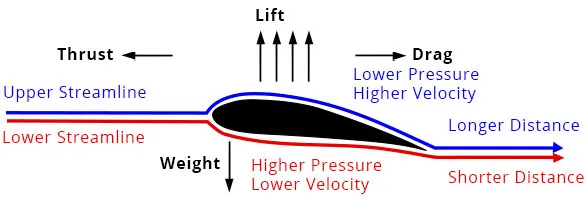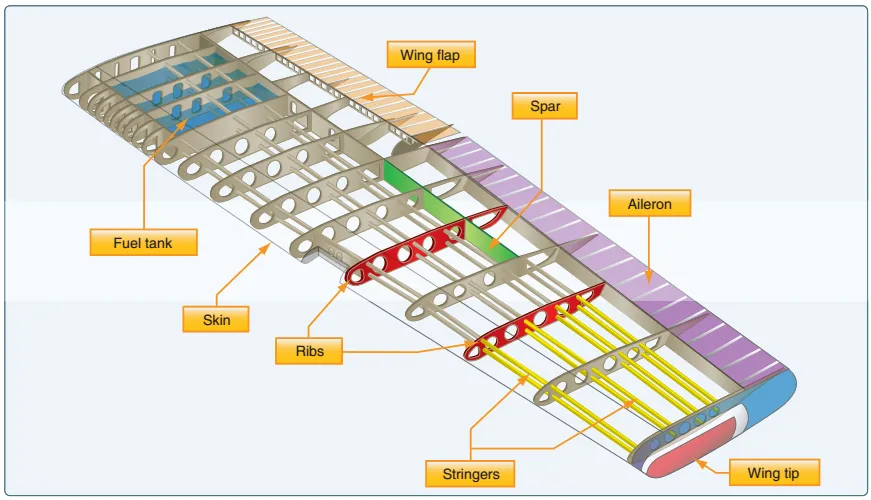

For a wing to work, it has to move through air to produce lift. A bird uses muscles, planes have engines – propellers or jet engines. Engines pull the plane through the air at high speed. Because of a wing’s special curved shape, the air flowing over a wing experiences a pressure difference between the upper and the lower surfaces, producing an upward force called lift, which is greater than the weight of the plane.
As a plane flies faster, it’s resistance in the air, called drag, increases, but the lift of the wing increases, allowing the plane to fly. So the four forces acting on a flying plane are: thrust from the engines; weight of the plane, drag (air resistance of the whole plane), and lift from the wings.
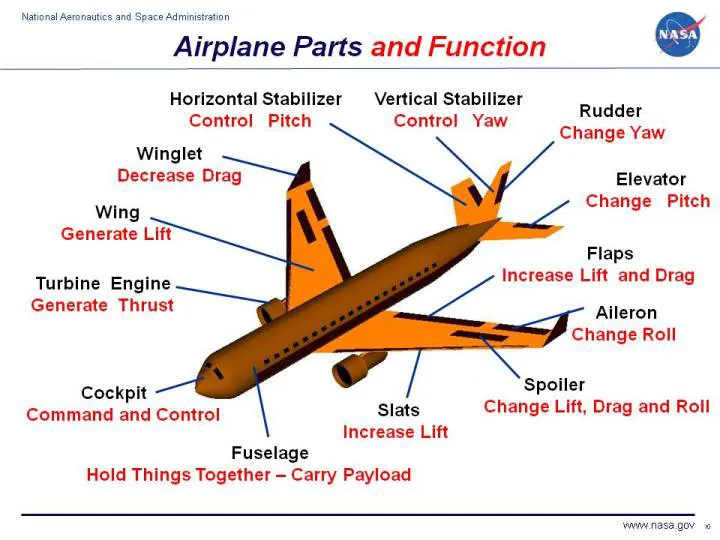
There is a minimum speed before the lift is greater than the weight of the plane which is why a plane needs a long runway before it can ‘take off’. Once in the air, the ailerons on the wings allow the pilot to control the direction of flight.
The flaps allow the wing to change its shape so that it can produce more lift, but that increases the drag. Flaps are extended during take-off and landing to produce more lift at lower speed, but are retracted during flight to reduce the drag.
A wing has to be designed to be as large as possible, but as light as possible, requiring a strong skeleton with a strong skin. The cavity is used for the fuel tanks which helps keep the centre of gravity in the middle of the plane for stability in flight.




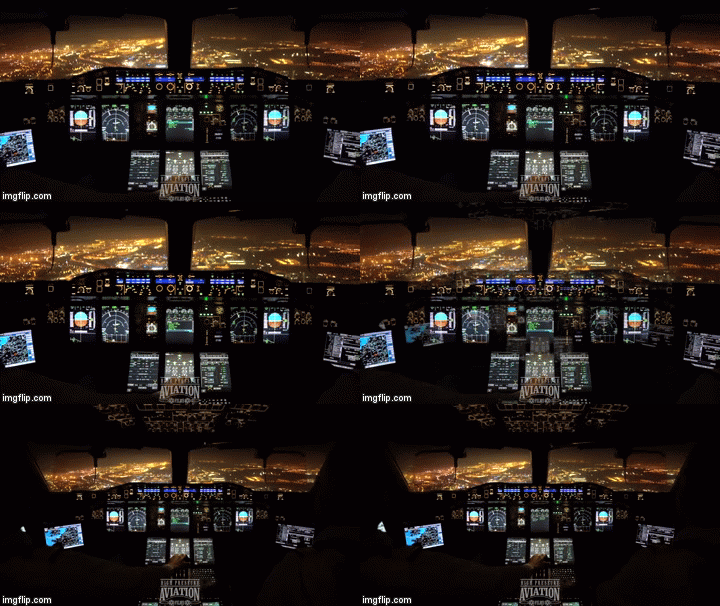


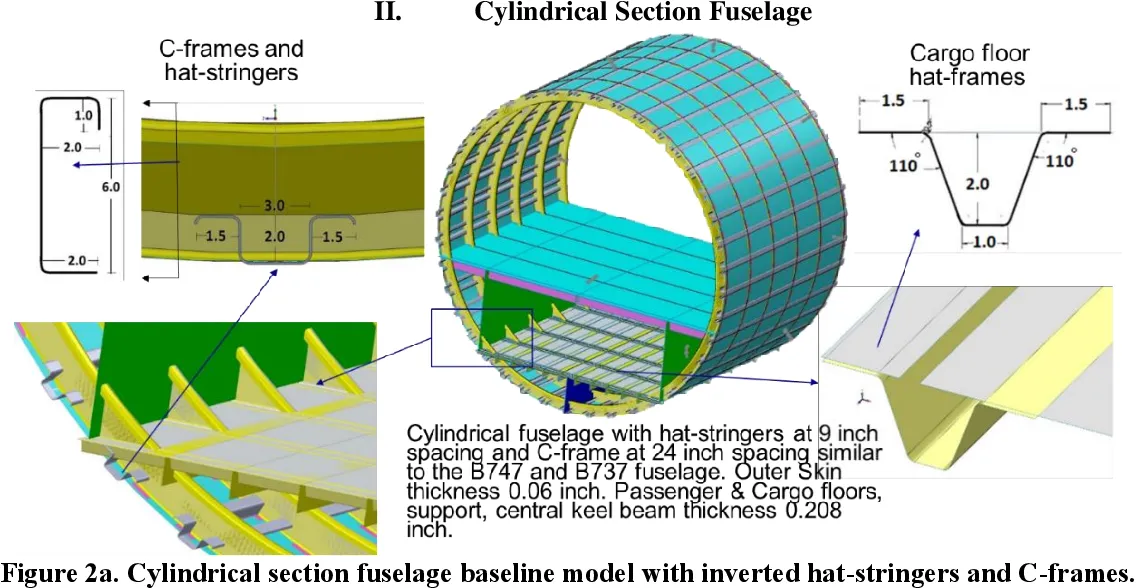

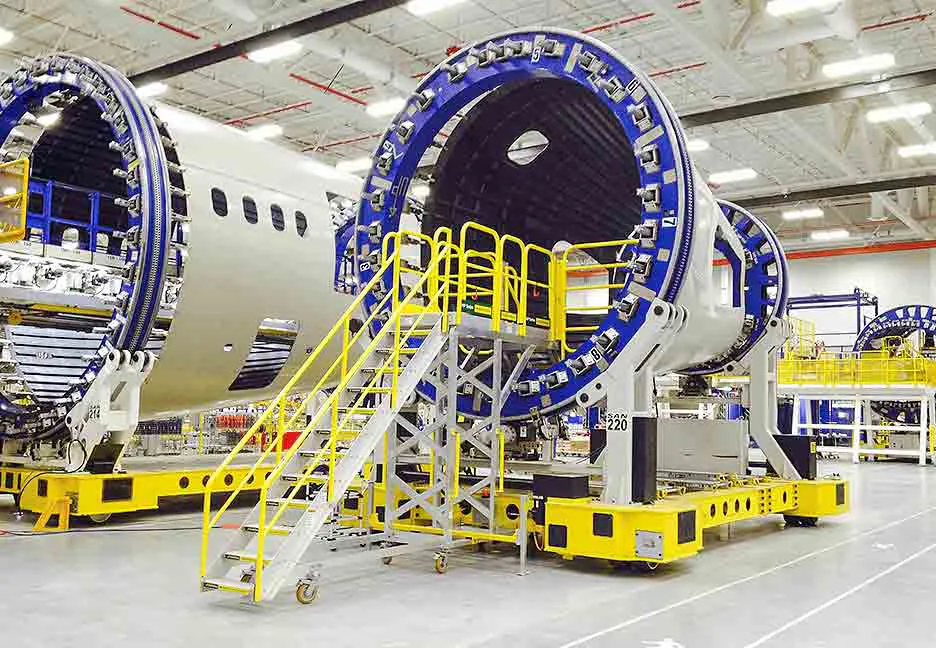
The fuselage is the main body of an aeroplane to which everything else is attached. It is a long hollow tube, made as light as possible, yet strong enough to withstand the extremely low pressure and sub-zero temperatures outside the plane when flying at altitude.
A passenger plane needs a wide fuselage to provide space for many passengers and luggage, but that increases the drag and limits the maximum speed. Whereas a supersonic fighter plane, which requires little space for its heavy payload, has a slender streamlined fuselage which allows it to fly much faster.
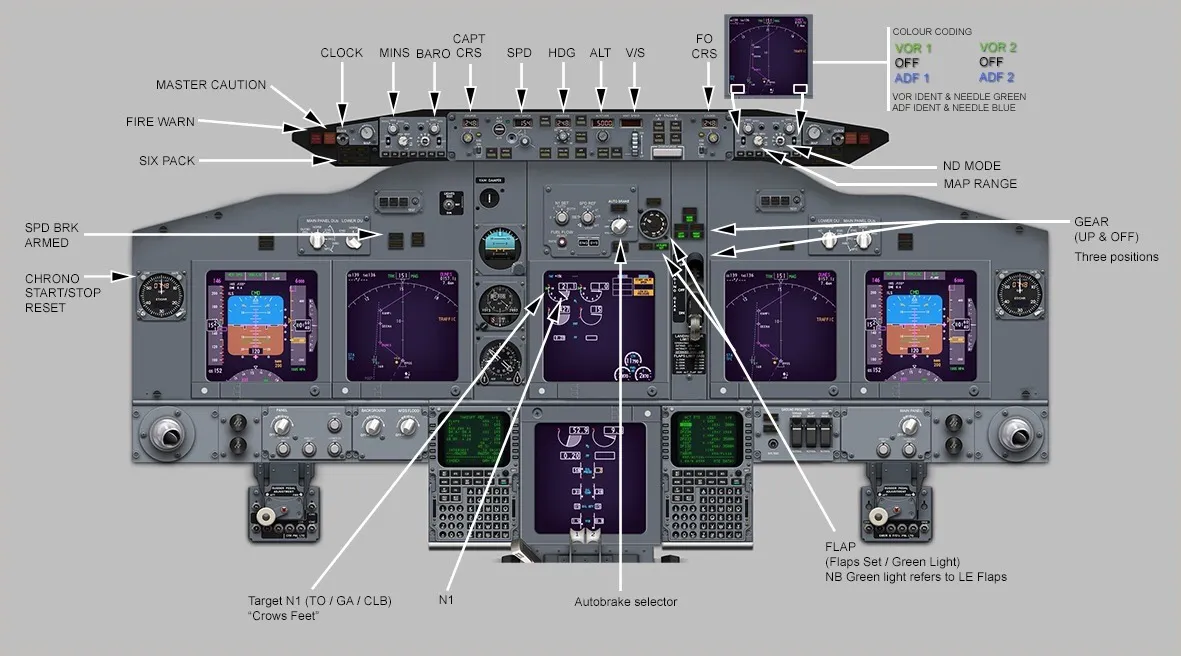
On an airliner, the pilots sit in a cockpit at the front of the fuselage; the main fuselage carries passengers and cargo; fuel is stored in the wings to which the engines are attached; and the tail section carries the stabilizer fins and rudder.
Structural considerations are: the large forces where the wings are attached to the fuselage; window sizes are limited due to the pressure differences and pressure changes; the doors require special seals and locking mechanisms. For passenger aircraft the interior of the plane must be pressurised and air-conditioned.
Because the consequences of aircraft failures can be so extreme, planes have to be stripped down at regular intervals to check for cracks on all the structural members.

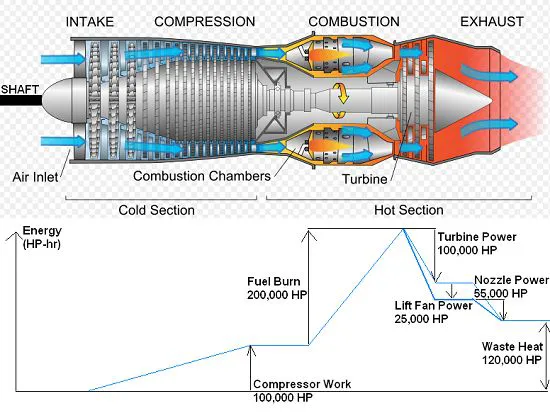
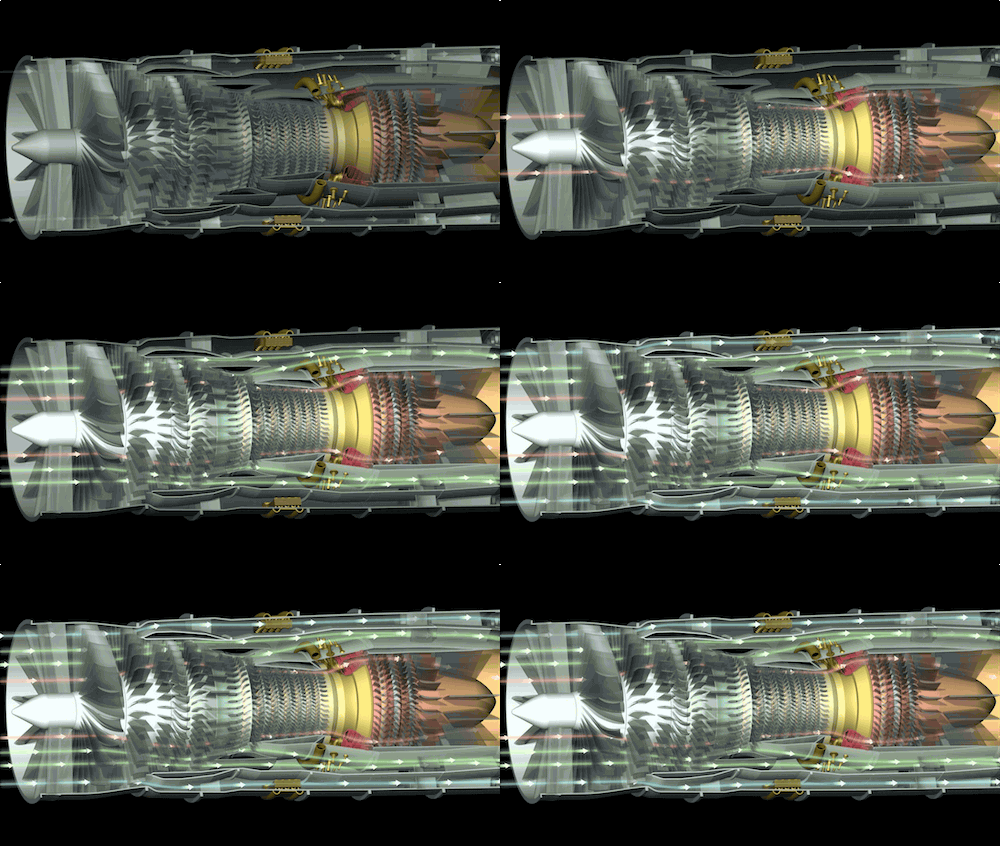
Jet engine
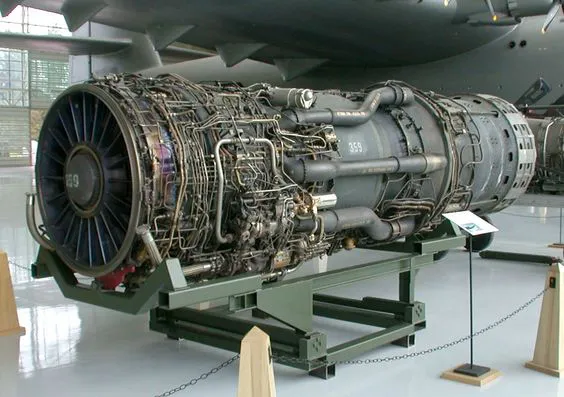
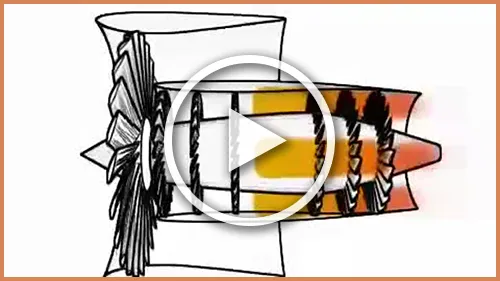
A turbojet engine is a gas turbine engine that works by compressing intake air with a multi-stage compressor (axial, centrifugal, or both), injecting fuel into the compressed air and burning the mixture in a combustion chamber. The hot, high pressure, exhaust gas passes through a turbine, which drives the inlet compressor, and out the exhaust nozzle. So the engine converts the chemical energy in the fuel to kinetic energy in the exhaust, producing thrust. In a turbojet engine all the inlet air passes through the compressor, combustor, and turbine.
Whereas a turbofan engine has a large inlet fan which accelerates additional air in a duct surrounding the jet engine to produce extra thrust. Turbofans are the dominant engine for medium and long-range airliners.
Turbofans are usually more efficient than turbojets at subsonic speeds, but at high speeds their large frontal area generates more drag. Therefore, for supersonic flight, and in military and other aircraft, where other considerations have a higher priority than fuel efficiency, fans tend to be smaller or absent.
Turbofan engines are categorized as low-bypass or high-bypass, depending upon the amount of air which bypasses the core of the engine. Low-bypass turbofans have a bypass ratio around 2:1 or less.
Turbines have superior power-to-weight ratios than piston engines, and are more reliable for continuous high outputs. Turbines also work better than a naturally-aspirated piston engines at high altitudes and cold temperatures. Their light-weight build, reliability, and high-altitude capability makes turbines the engine of choice for airplanes. Turbines are also commonly used at power plants for electricity generation (hyperlink).