Braking System
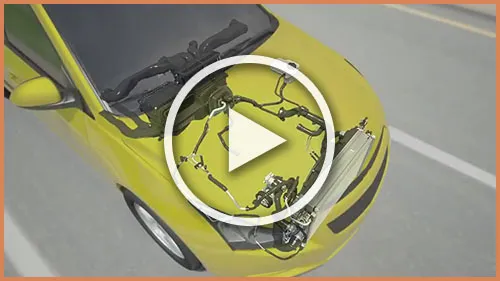
A good braking system is essential for stopping your vehicle. Pressing the brake pedal, which is attached via levers to the master cylinder, applies pressure to brake fluid within a network of hydraulic pipes connected to actuators on the actual brakes at each wheel. The more force a driver applies to the brake pedal, the higher the stopping force that is applied at the wheels. The master cylinder has a reservoir that keeps the system full of brake fluid.
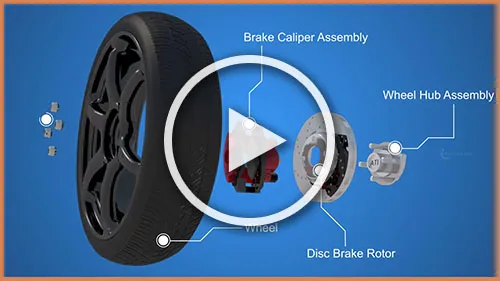
Disc brakes use pads lined with friction material to grab a steel disc that is rotating with one of the road wheels, whereas drum brakes have brake 'shoes', also lined with friction material, that are pushed against the inside of a rotating drum inside a road wheel.
Front brakes play a greater part in stopping a car than the rear ones because braking throws the car weight forward on to the front wheels. Many vehicles therefore have disc brakes at the front and drum brakes at the rear. The handbrake, which is also considered an emergency brake, is usually connected to the rear brakes by steel cables.
The force applied to the brakes can be boosted by a 'servo' that uses either engine vacuum or hydraulic pressure to amplify the force from the master cylinder, so the driver does not have to push the pedal as hard.
Most modern vehicles are fitted with an electronic Anti-lock Brake System (ABS) to prevent skidding. The ABS can detect any wheel skidding through electronic sensors and adjust the braking force on any wheel using high-pressure pumps, allowing maximum braking force during an emergency stop.